THE BOOK
Bound, not spiral
Guidance asks for a permanently bound book with consecutively numbered pages, so it is obvious if anything has gone missing.
Set one up
 doodlenotebooks
THE LAB NOTEBOOK
NOTHING comes out
A lab notebook is a record, not a diary.
Research guidance asks for something simple and strict: write it down at the time, in ink, in a bound book, and never remove anything. The aim is that someone outside your lab could read what was done without you there to explain it.
Updated
Check a habitTHE SHORT ANSWER
The rules all serve one goal:
a record anyone can check later.
THE BOOK
Guidance asks for a permanently bound book with consecutively numbered pages, so it is obvious if anything has gone missing.
Set one upTHE PAGE
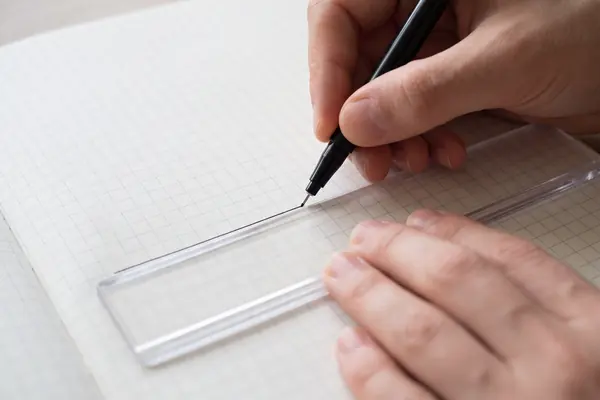
If part of a page is left blank, draw a line through it. Mistakes get a single line too, so the original can still be read.
Check a habitTHE SHELF
The Medical Research Council asks for basic research records to be kept at least 10 years after a study ends, and lab notebooks are part of that.
See the numbersA QUICK HABIT CHECK
Pick a notebook habit to see what the guidance says. The bar shows how much the habit puts the record's trustworthiness at risk.
Based on university lab notebook guidance. Your own lab or organisation may have its own rules: follow those first.
TWO NUMBERS WORTH KNOWING
Minimum retention periods in the MRC's
framework for research data and records.
10+ years
Keep records after the study ends
The Medical Research Council's minimum for basic research is at least 10 years after study completion. Where intellectual property may arise, notebooks may need keeping far longer, potentially indefinitely.
BASIC RESEARCH · MRC
20+ years
Keep records after the study ends
Population health and clinical studies have a minimum of at least 20 years. From 28 April 2026, clinical trials of medicines need at least 25 years.
CLINICAL STUDIES · MRC
The MRC notes that for some basic research, lab notebooks alone may give enough detail to understand what was done, when, how and why.
FOUR HABITS TO START WITH

None of this needs special kit: a bound book, a pen with permanent ink and the discipline to write things down as they happen.
Use a permanently bound book with numbered pages. Keep a few pages at the front for a table of contents listing page numbers, dates and subjects.
Date, title and a brief statement of purpose, then the method: materials, instruments and any deviation from the plan.
Write raw data and observations straight in, in permanent ink and legibly, including the readings that look wrong.
Cross out mistakes with a single line, sign and date corrections, and never cover up what was there.
WHAT REGULATORS ASK OF DATA

The UK medicines regulator, the MHRA, sums up good data with the acronym ALCOA: attributable to the person who made it, legible and permanent, contemporaneous, the original record or a certified true copy, and accurate.
It adds that data should also be complete, consistent, enduring and available for review. A well-kept lab notebook is a paper version of the same idea.
Questions
A permanently bound book with numbered pages shows at once if anything has been added or removed. Guidance specifically prefers bound books to spiral ones.
Guidance asks for permanent ink, so that entries cannot be rubbed out. The MHRA's data principles likewise ask for records that are legible and permanent.
Draw a single line through it so the original can still be read, then initial or sign and date the correction. Never remove or cover up what was there.
Yes. All data goes in, including outliers, failed runs and contradictory results. Record what happened even if an experiment fails completely.
It depends on the field and the funder. The Medical Research Council's minimum is at least 10 years after completion for basic research and at least 20 years for population health and clinical studies.
Sources
ABOUT THIS NAME
doodlenotebooks.com is part of the DoodleSale portfolio. It isn't in an auction right now, but you can ask about leasing it.